

Understanding Neuroblastoma
What is Neuroblastoma?
Neuroblastoma is a rare cancer of the nervous system that is most common in children under the age of 5 years.
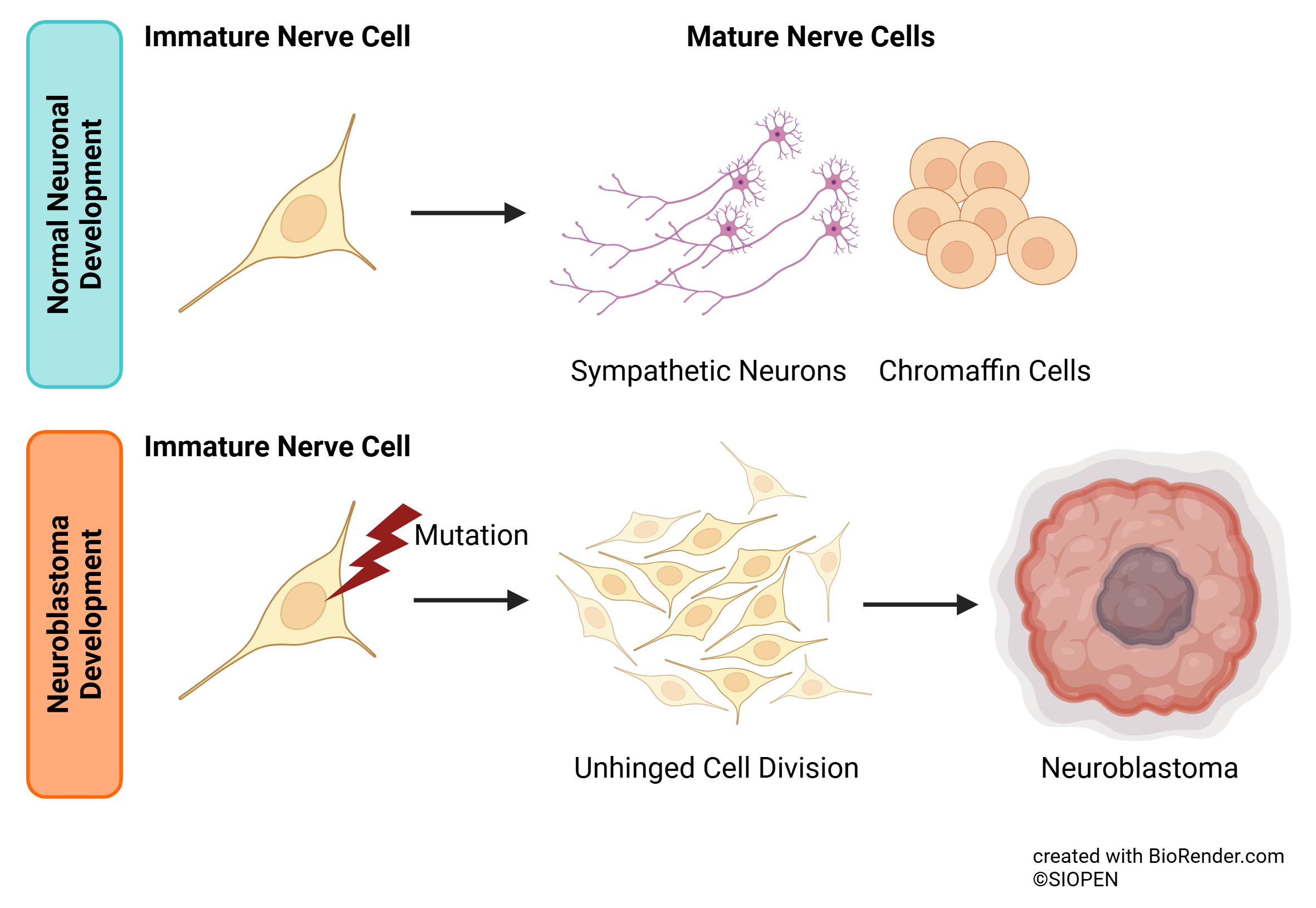
It is an accumulation of a lot of cells that did not finish “growing up” and ceased to fully develop as they were supposed to. Therefore, they keep dividing and form a big mass that is described as a tumour. In the case of Neuroblastoma, the cells forming the tumour are immature neuronal cells (Neuroblasts) that were supposed to develop into nerve cells.
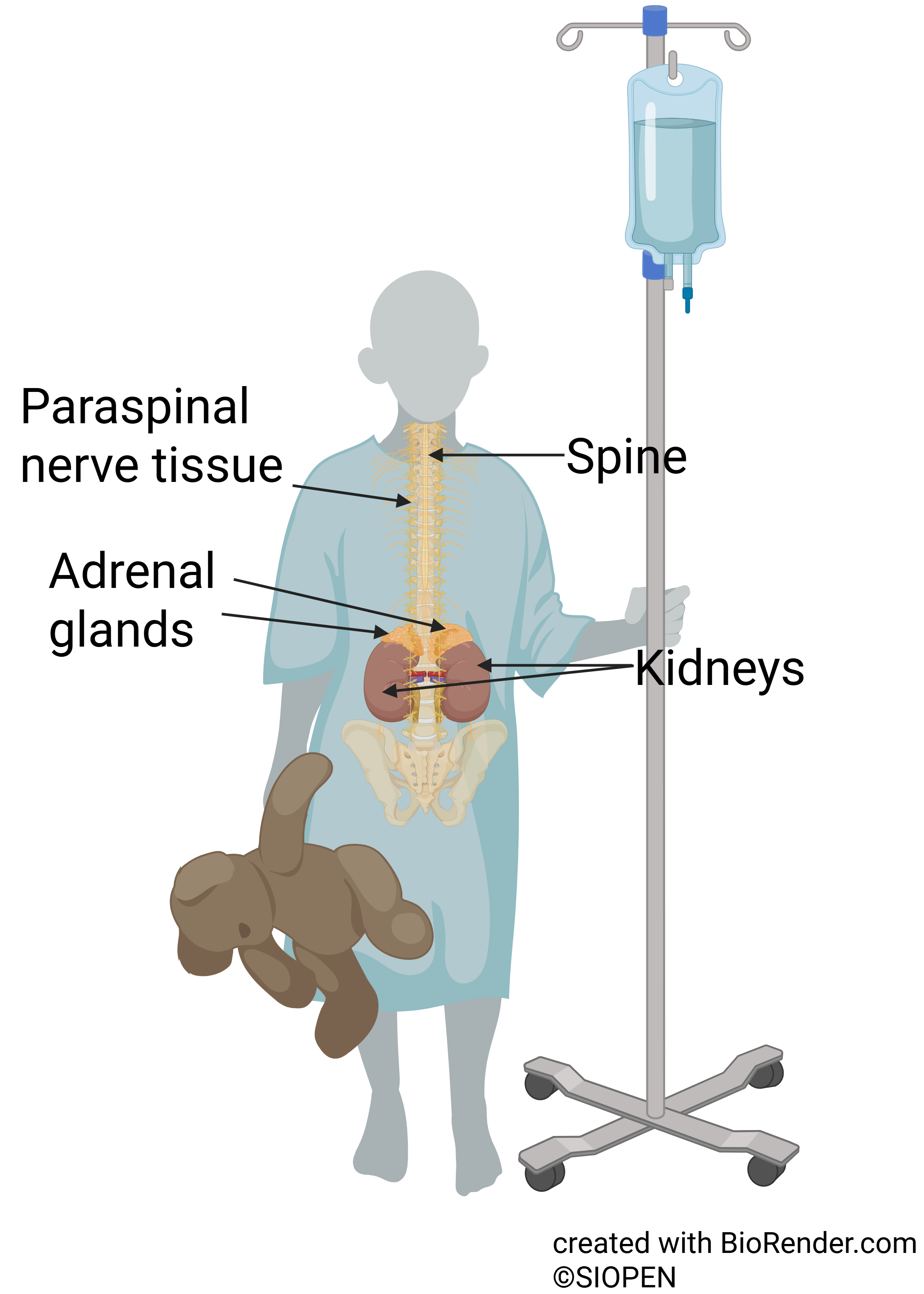
Since the regular path of development of these cells would have been to form the nerve tissue along the spine, in the chest and abdomen, and, most importantly, the adrenal glands (sitting like a cap on your kidneys), this is where Neuroblastomas can usually be found. In some cases, it might also spread to other organs e.g., bone marrow, bone, liver, lymph nodes, skin or brain.
What causes Neuroblastoma?
The cause of Neuroblastoma is still not fully understood. Its origin can often be traced back to embryonal development in the womb or to the first months of life, when neuronal cells arrest in an immature state. Often, there are changes in the DNA that can cause the neuronal cells to derail from their normal path of development, leading to unhinged cell division and tumour development.
These DNA alterations are only rarely inherited but rather occur spontaneously during development.
It is important to note that Neuroblastoma is not caused by lifestyle, and it is not preventable.
Signs and symptoms
Since the location and extent of Neuroblastoma can vary, so can the signs and symptoms.
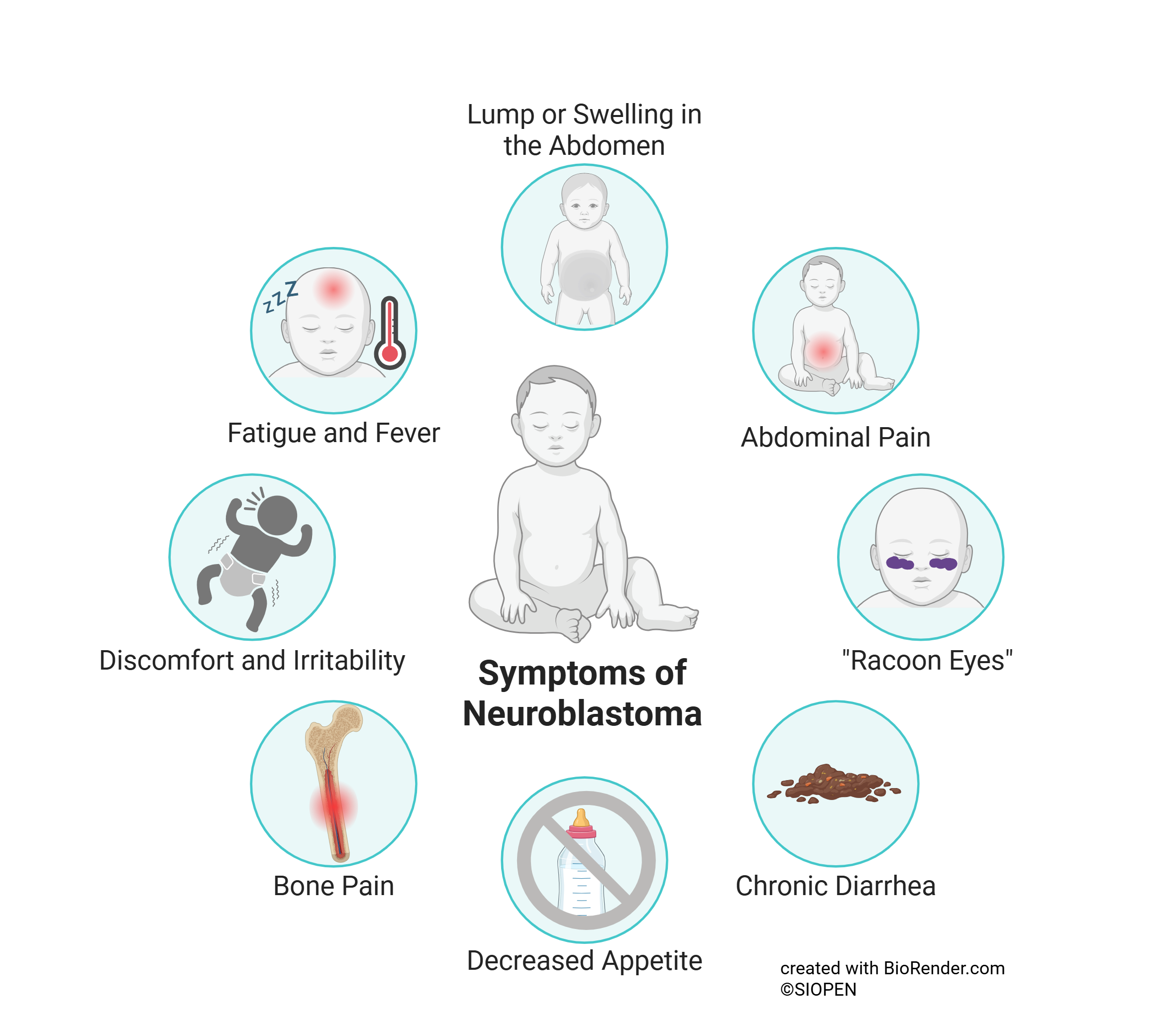
Symptoms can be:
A lump or swelling in the abdomen
Abdominal Pain
“Racoon Eyes”, bruising around the eyes, or drooping eyelids
Chronic diarrhea
General illness e.g., fatigue, fever, unexplained weight loss, decreased appetite, irritability, weakness, bone pain
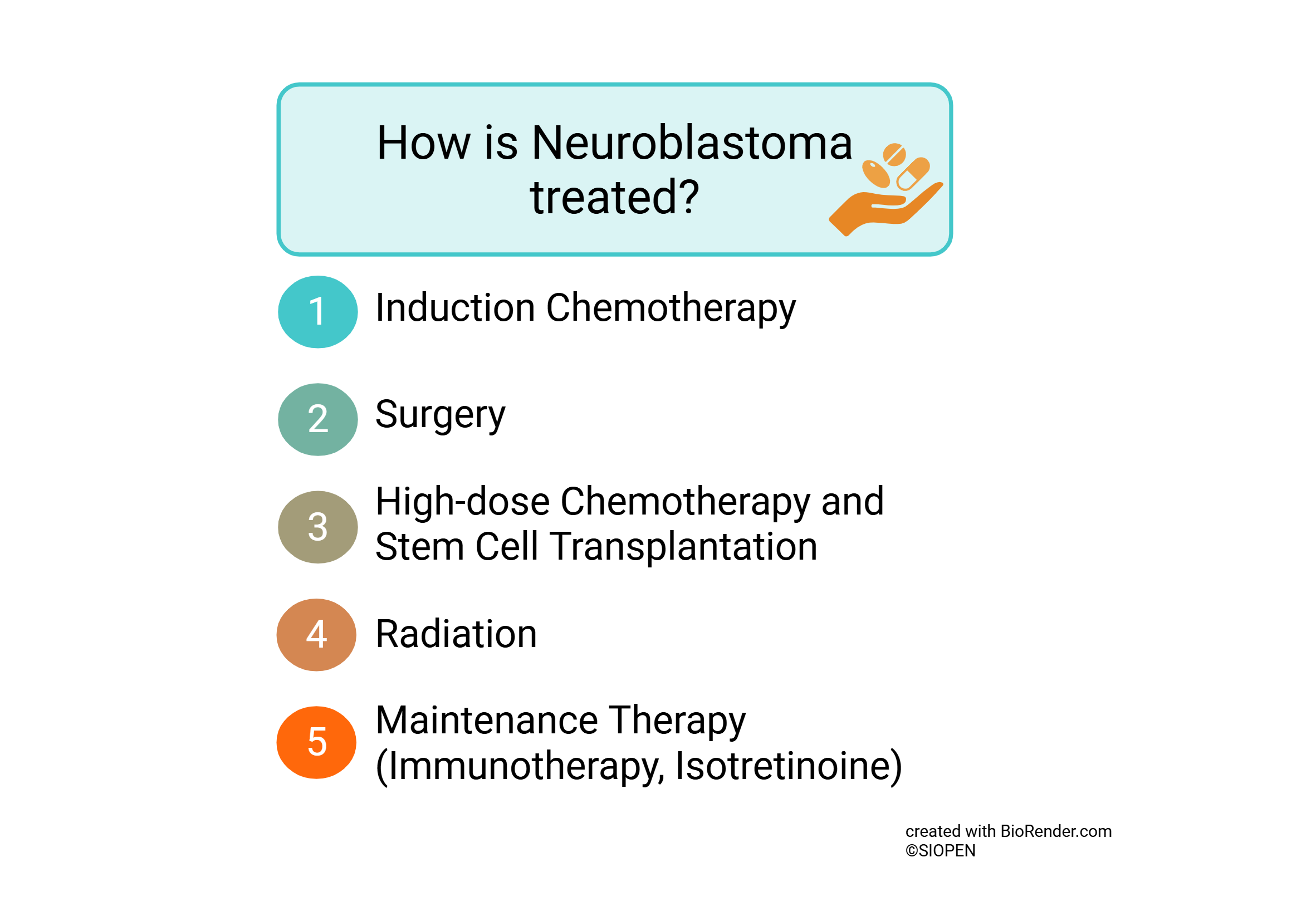
Phases of treatment

How it is diagnosed
Neuroblastoma is usually diagnosed by a combination of physical exams, biopsies, urine and blood analysis.
A doctor will examine your child to check for general health state, physical activity, and signs of neuroblastoma.
If Neuroblastoma is suspected, one of the first steps can be an ultrasound, which allows to see changes in the abdomen if there are any. Further imaging tests (e.g. MRI, CT, MIBG Scan, PET Scan) can be done to see certain body parts in more detail and to assess the extent of the tumour.
A tumour biopsy and certain parameters in blood and urine analysis (liquid biopsies) in a laboratory can help to verify the diagnosis and to evaluate the aggressiveness of the tumour. Bone marrow might also be sampled and analyzed to check for metastases.
Different types and stages
Neuroblastoma is very heterogeneous in its biology but also in its extent, aggressiveness, treatment response and prognosis.
Therefore, there is a system you might be confronted with that is used to describe the stages of Neuroblastoma.

Glossary of common terms in paediatric oncology
Adrenal Glands
Small hormone-producing glands that sit on top of each kidney.
The adrenal glands help control heart rate, blood pressure, stress response, and other important body functions. Neuroblastoma often starts in these glands.
Biopsy
A small sample of tissue is taken from the body to be examined under a microscope.
Doctors perform a biopsy to confirm whether a tumour is cancer and to learn more about its specific features, which helps guide treatment.
Bone Marrow
The soft, spongy tissue inside bones where blood cells are made.
Bone marrow produces red blood cells (carry oxygen), white blood cells (fight infection), and platelets (help stop bleeding).
Neuroblastoma can sometimes spread to the bone marrow.
Extracranial
Outside of the brain.
If a tumour is extracranial, it means it is located somewhere in the body other than the brain.
Horner’s Syndrome
A group of symptoms caused by pressure or damage to certain nerves in the neck.
It can cause:
A drooping eyelid
A smaller pupil in one eye
Reduced sweating on one side of the face
In neuroblastoma, this can happen if a tumour presses on nearby nerves.
CT Scan (Computed Tomography)
A detailed X-ray scan that creates cross-section pictures of the body.
A CT scan helps doctors see the size and location of a tumour and whether it is pressing on nearby organs.
MRI (Magnetic Resonance Imaging)
A scan that uses magnets and radio waves to create detailed pictures of the inside of the body.
An MRI does not use radiation. It helps doctors see tumours, nerves, and soft tissues clearly.
PET scan (Positron Emission Tomography)
A scan that shows how active cells are inside the body.
A small amount of a safe radioactive sugar solution is injected into the bloodstream. Cancer cells often use more sugar than normal cells, so they “light up” on the scan.
Metastasis
When cancer cells spread from the original (primary) tumour to other parts of the body.
These cells travel through the blood or lymph system and form new tumours elsewhere.
Paraspinal Nerve Tissue
Nerve tissue located next to the spine.
“Paraspinal” means beside the spine. Neuroblastoma often develops from early nerve cells that run along the spine.
Treatment-related terms in Pediatric Oncology
Central Line (Port)
A small tube is placed into a large vein to give medicines and take blood without repeated needle sticks.
Chemotherapy
Medicines that kill cancer cells or stop them from growing.
Immunotherapy
Treatment that helps the body’s immune system find and attack cancer cells.
Radiation Therapy
High-energy rays used to destroy cancer cells.
Relapse / Recurrence
When cancer comes back after treatment.
Remission
When signs of cancer decrease or disappear after treatment.
Side Effects
Unwanted effects of treatment, such as nausea, hair loss, or infection risk.
Stem Cell Transplant
A treatment where a child receives high-dose chemotherapy followed by replacement of blood-forming stem cells.
Surgery
An operation to remove as much of the tumour as possible.
We recognize that families facing a neuroblastoma diagnosis may be searching for information, guidance, and support during a challenging time. However, SIOPEN is unable to provide individual medical advice, treatment recommendations, second opinions, or assistance with patient referrals.
For questions regarding a specific patient's care, please consult your treating physician or contact hospitals that accept international patients directly.